

- Keywords:
- UVSSsupplier Since2000 SEENBOOM
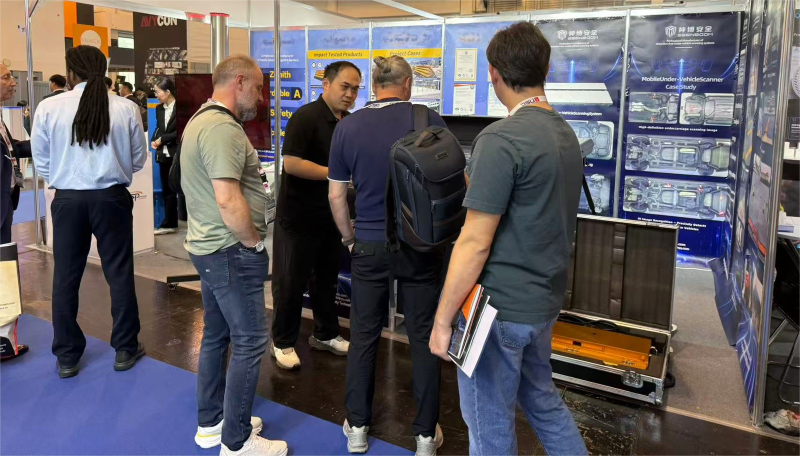 Seenboom at Security Essen 2026, Messe Essen, Germany: visitors examining a UVSS under vehicle scanning system on the stand.
4 Major Security Trends Observed at Security Essen 2026
Four themes ran through the stand conversations, and each one changes how a vehicle access security specification is written.
1. Critical Infrastructure Protection Has Moved Up the Agenda
Ports, prisons, data centres and government compounds were named repeatedly, and the projects behind them are covered in our critical infrastructure solutionsoverview. Threats at these sites have become more concealed, and objects hidden under a vehicle are treated as a serious design case rather than a routine check. Visitors no longer accept basic visual inspection. They want protection they can audit, with imaging and records that hold up when an incident is reviewed.
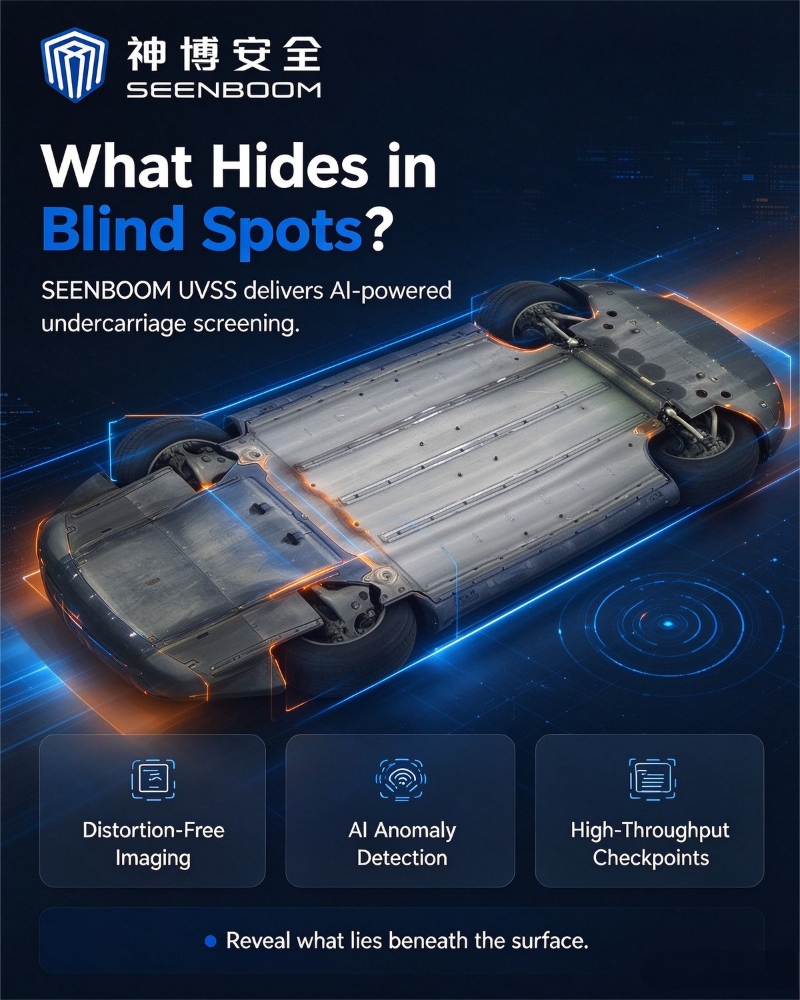
Critical infrastructure screening: what hides in the blind spots of an undercarriage, and how detection makes the hidden visible.
2. Interoperable, Unified Security Platforms
The pain point repeated by almost every integrator was multi-brand equipment that does not talk to each other. The requirement has shifted from one more standalone screen to a unified security platform: an open API, integration with VMS and access control, and one place for alarms and logs. Reducing the consoles an operator has to watch is now part of the buying decision, not a preference.
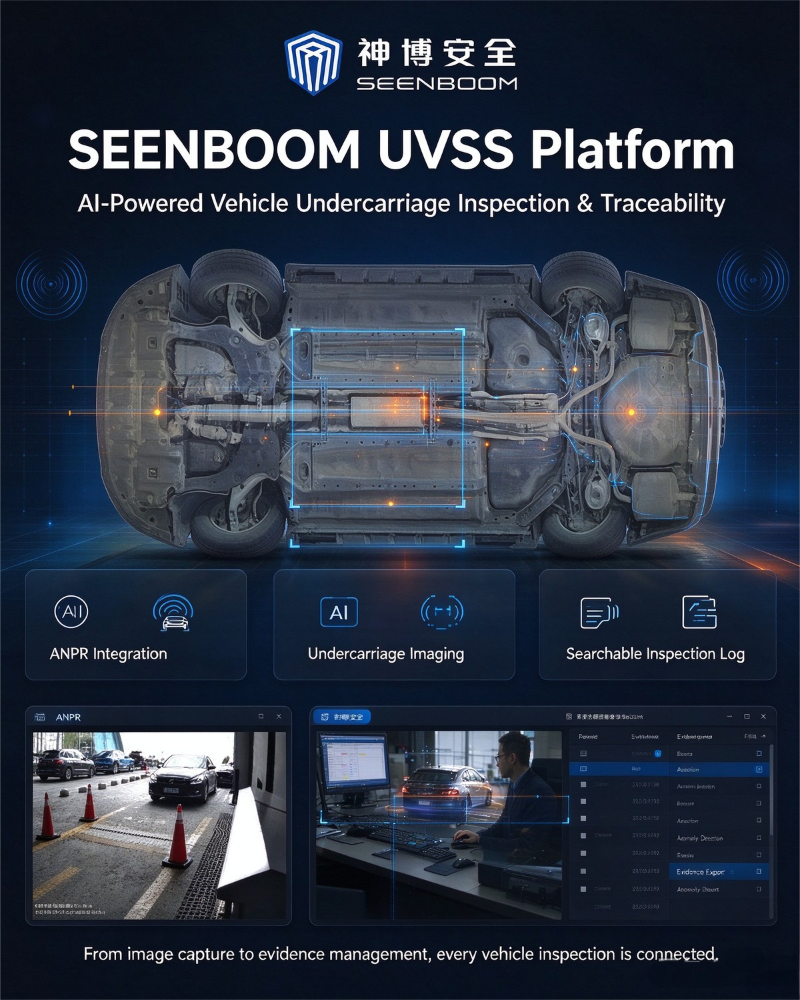
A unified UVSS platform: ANPR integration, undercarriage imaging and a searchable inspection log in one interface, connected to the site VMS.
3. AI Automated Threat Detection Replaces Manual Screening
Manual screening has a known failure mode: operators get tired, and fatigue arrives as missed detections. AI automated threat detection identifies foreign objects and modified chassis automatically, then hands them to a person to confirm. Less manpower tied to the lane, more consistent detection, and faster throughput when traffic peaks.
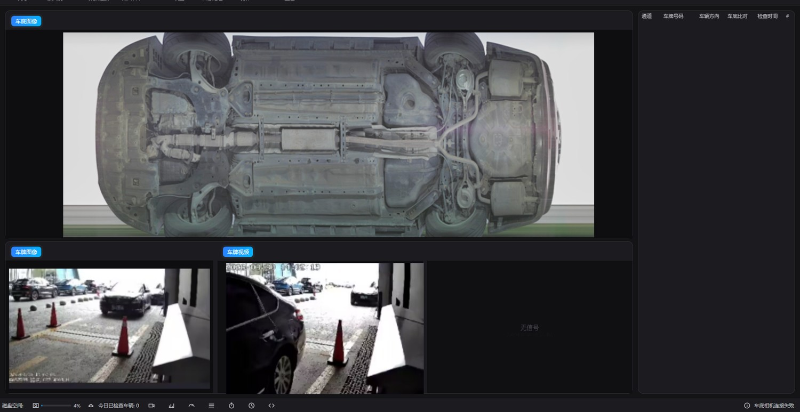
Operator software for an AI UVSS: the distortion-free undercarriage image, the number plate record and the camera views on one screen.
4. High Protection Ratings for All-Weather Outdoor Deployment
European weather is not forgiving. Rain, snow, road salt and low winter temperatures share the lane with the equipment, so protection ratings came up before resolution did. Systems specified today are expected to carry IP67 or IP68 sealing and to hold stable imaging in all weather across the operating range, because a weather-related failure becomes both a maintenance cost and a coverage gap.
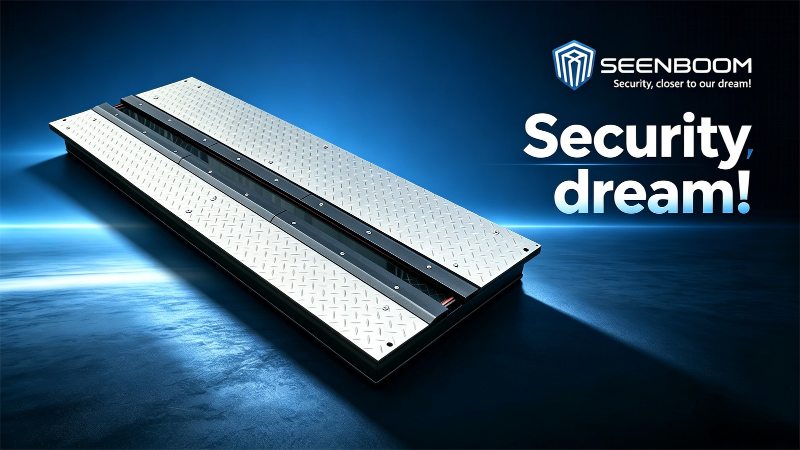
A sealed fixed UVSS deck with IP-rated protection, designed for year-round outdoor deployment in rain, snow and road salt.
From Manual Inspection Mirrors to AI UVSS: Core Advantages
The traditional approach to under vehicle inspection is a mirror on a pole. An officer walks the lane with it, judging the underside by eye. The method is slow, it depends entirely on attention, it produces no high-definition image that can be kept as evidence, it builds a queue as soon as traffic rises, and in heavy rain or deep cold it is often skipped.
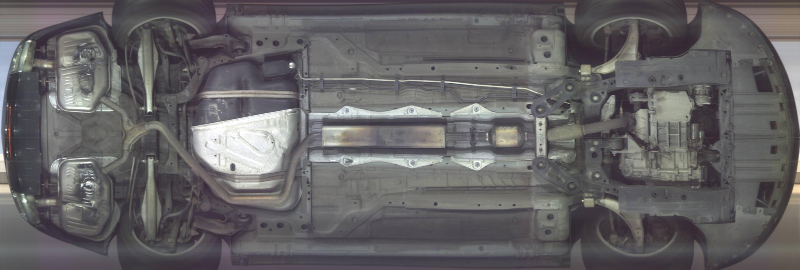
A real distortion-free undercarriage image from a Seenboom UVSS: the complete underside is captured in one pass, edge to edge.
A modern AI UVSS answers each of those weaknesses with four core advantages.
AI dewarping and distortion-free imaging. The optical chain corrects the perspective the sensor sees, so the operator receives a complete, flat and geometrically true undercarriage image instead of a set of curved strips. Frame edges and corners survive the correction, which is what decides whether a small attached object is visible at all.
Stable performance in all weather conditions. Sealed IP67 or IP68 housings and a temperature range specified for outdoor lanes keep imaging consistent through rain, standing water, dust and low temperatures, so coverage does not drop when conditions change.
Open Web API for seamless integration. Detection results and images are delivered into the VMS, access control or barrier system already installed on site, so the UVSS becomes part of one operating picture instead of a separate workstation. The interfaces behind it are described in our guide to vehicle inspection system integration.
AI auto-detection of hidden threats. Foreign objects, contraband and underbody modification are flagged automatically and shown to the operator already annotated, which removes the need to watch the image continuously.
The result is that UVSS is no longer a standalone inspection device. It has become an intelligent sensing node inside the perimeter security system, feeding the same platform that manages the gate.
For Security Integrators: How to Embed UVSS into Perimeter Security Solutions
For an integrator, under vehicle inspection is the first screening point at a site entrance, not a system that stands alone. A workable design links three layers: ANPR reads the number plate, the UVSS captures the undercarriage and runs detection, and the access control or VMS layer decides what happens next, with the barrier releasing only when both the identity and the vehicle record are clean.
Embedded this way, it raises the competitiveness of the whole scheme. A screening layer that produces audit-ready records meets the EU project compliance requirements that a camera-only design cannot, and it gives the integrator a technical differentiator at tender stage. The layer options are collected under checkpoint accessories and the layout principles in vehicle inspection checkpoint design.
Four practical points decide whether the project lands cleanly: CE certification for the equipment, on-site installation support, responsive technical help during commissioning, and test reports issued before handover so site acceptance is not delayed. Project teams can also request custom UVSS engineering where the lane geometry is unusual.
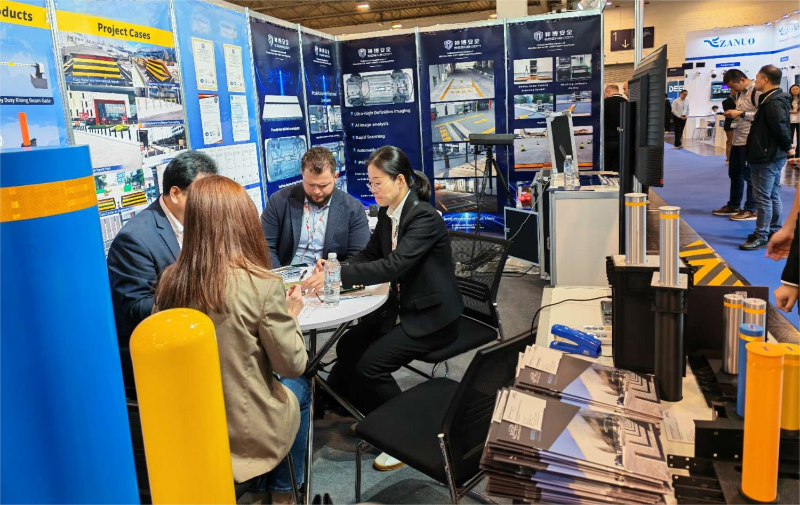
Seenboom engineers in a project meeting with European security integrators at Security Essen 2026. Photo: Seenboom.
Conclusion and Next Steps
Security Essen 2026 confirmed what buyers on the ground already assume. Vehicle undercarriage inspection is moving from optional accessory to a hard requirement for critical infrastructure, and AI capability, integration readiness and outdoor reliability are the three yardsticks to select against.
If you are designing or upgrading perimeter security for critical sites, contact our teamtoday. Ask for our European project references and the CE compliance documentation for UVSS, then book a technical consultation to discuss your site requirements. You can also write directly to zhangxiaohui@seenboom.com, or review the UVSS product range and the 12-point UVSS supplier checklistbefore your next tender.