

- Keywords:
- UVSSsupplier Since2000 SEENBOOM
Thousands of vehicles pass through security checkpoints every day, yet the underside of each one remains the largest blind spot in the entire inspection chain. Mirror-on-a-stick checks depend on one person's eyesight and attention, they produce no record, and their standard shifts with fatigue. AI undercarriage detection closes that gap: an under vehicle scanning system turns the raw chassis image captured at the lane into a reliable, repeatable, automatically flagged security decision. This article walks through the full pipeline - capture, baseline comparison, AI anomaly detection, and operator review - so you can judge exactly what the technology does before you specify it.
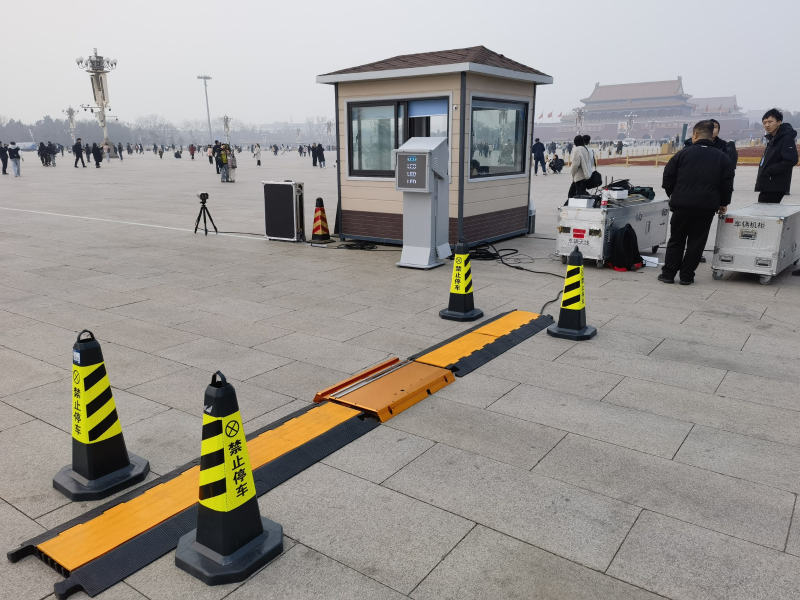
A scanning lane installed at a controlled checkpoint - every vehicle crossing the deck is scanned and archived automatically.
01 Step One - Capture: The Raw Chassis Scan
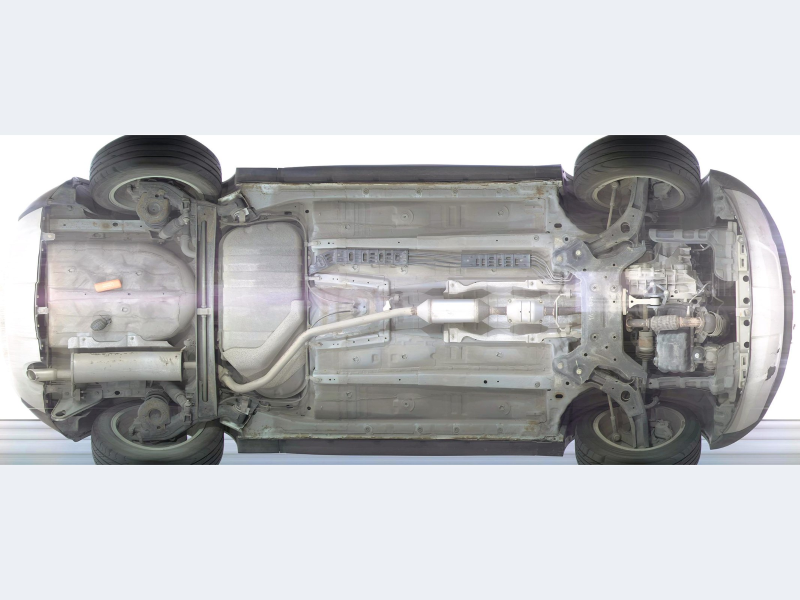
The pipeline begins the moment a vehicle drives over the scanning platform at a controlled speed. High-resolution camera modules sealed inside the deck capture the entire underside in one pass, and the stitching engine assembles their frames into a single seamless, distortion-free panorama of the full chassis - wheels, axles, fuel tanks, exhaust runs and anything attached to them. Distortion control is what separates a usable scan from a useless one: if the image stretches or blurs at the edges, small objects become invisible exactly where someone would hide them.
Deployment flexibility matters just as much as image quality. A fixed platform lives in the lane permanently for high-volume sites, while a portable deck rests on the road surface and moves with the operation - same imaging chain, different civil-works commitment. Either way, every module sits inside an IP68-sealed housing, because rain, dust, high-pressure washing and standing water are daily realities at outdoor checkpoints.
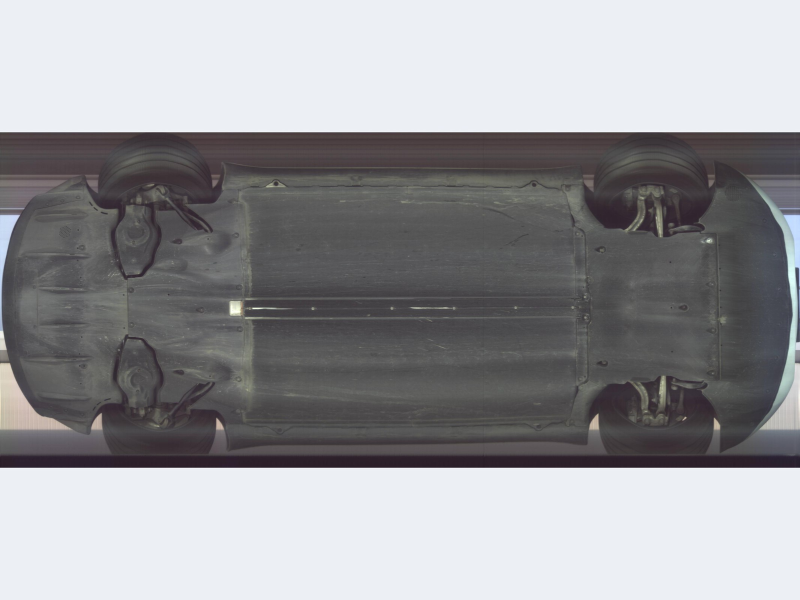
A stitched full-width chassis image - the raw material every later stage of AI undercarriage detection works from.
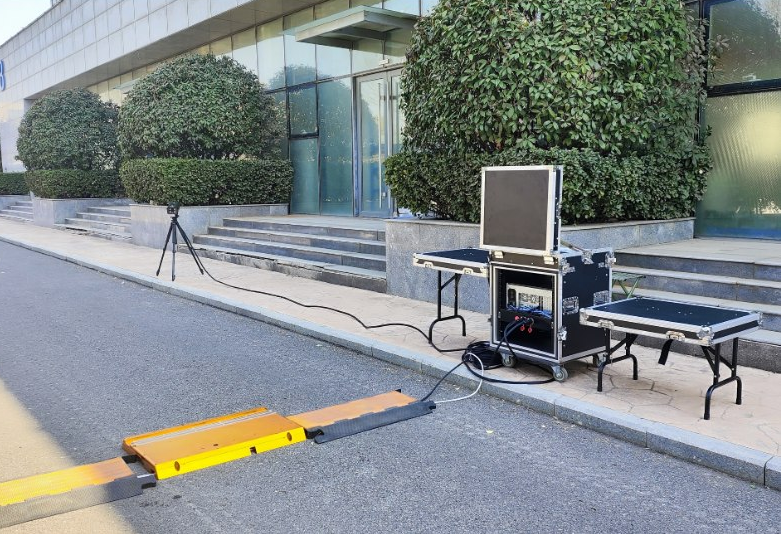
A portable UVSS deck with its roadside camera stand - the same imaging chain as a fixed lane, deployed on the surface.
02 Step Two - Baseline Images and Comparison
Raw images alone cannot answer the real question: has this vehicle changed since the last time we saw it? That is why the system stores a clean baseline image for every registered vehicle in its archive. Each time the same vehicle returns, the fresh scan is aligned and overlaid on its baseline automatically - no operator has to remember what the car looked like in March.
The comparison engine highlights what differs: new objects bolted to the frame, added compartments, modified brackets, displaced components. For vehicles that cross a checkpoint daily-staff shuttles, delivery trucks, contractor vans - this is the single most valuable capability in the whole chain. A driver can fool a mirror once, but a vehicle that suddenly carries an extra underbody compartment cannot fool an archive that remembers every previous visit.
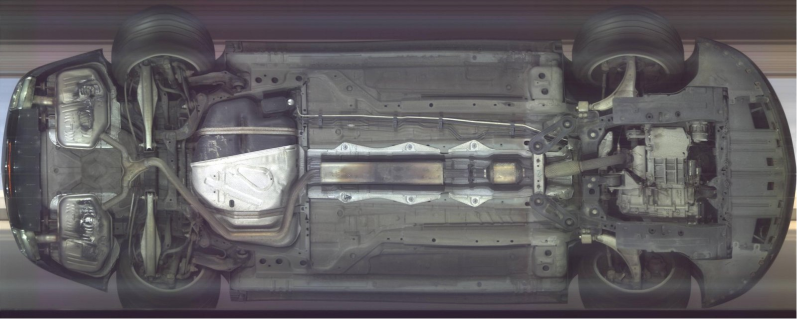
A clean baseline chassis image archived for a registered vehicle - every future scan is compared against it.
03 Step Three - AI Anomaly Detection
With the stitched image and the baseline in place, the AI detection model takes over. Trained on real checkpoint data, it scans the undercarriage for foreign objects, suspicious modifications and hidden attachments - then does the hardest part of the job: separating genuine anomalies from the normal mess of a working chassis. Loose heat shields, aftermarket exhausts, mud packs and factory brackets are part of everyday underbody noise; a magnetically attached pouch or a welded-on compartment is not.
The output is deliberately operator-friendly. Instead of a raw image and a shrug, the system presents flagged regions with confidence scores on screen, ranked so that the most probable threat is reviewed first. False alarms do not disappear entirely - no honest vendor claims that - but a model trained on production checkpoint traffic keeps them at a level one operator can actually process, which is precisely what manual inspection has never achieved.
Foreign objects and additions on a chassis are exactly the patterns the AI model is trained to flag automatically.
04 Step Four - Review, Alarms and Records
The final step keeps a human in command. The operator sees the flagged regions and the archived baseline side by side, confirms or dismisses each flag, and the decision is logged. Every scan is recorded - image, timestamp, vehicle identity, detection result - forming an auditable chain that survives inspections, investigations and insurance claims long after the vehicle has left the lane.
The system does not have to be an island. Events and flagged alarms can be pushed to third-party security software through RTSP video streams and an open API, so the UVSS slots into an existing checkpoint command platform instead of demanding a new silo. Integration is what turns a scanner into checkpoint infrastructure.
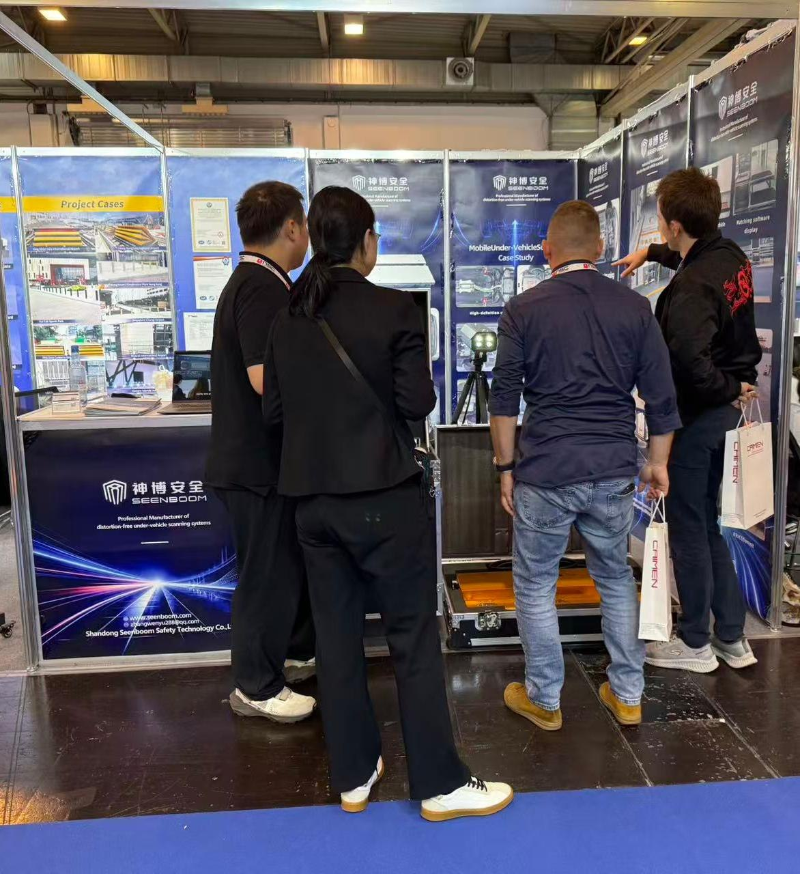
Operators review flagged undercarriage regions on screen during a live demonstration - the human stays in command of every decision.
05 Why Real Checkpoints Need This Pipeline
Put together, the four steps deliver what mirrors never could. Traffic keeps moving - no stopping, no queueing for a manual crawl under the vehicle. The standard never gets tired: 7x24 hours, the same detection logic applies to the first vehicle of the morning shift and the last one at midnight. And because every scan is stored, the checkpoint gains a searchable, auditable record of exactly what passed underneath, when, and what was found.
That is why under vehicle scanning systems are now standard equipment at border crossings, ports, airports, prisons and industrial parks - anywhere the question is not whether a vehicle will arrive, but what it might be carrying underneath.
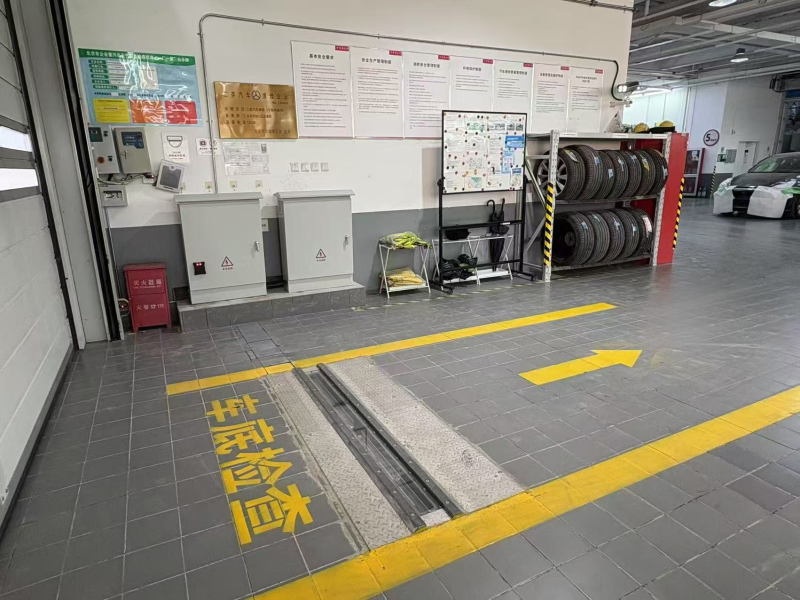
A fixed UVSS lane installed in a facility garage - screening every entry without slowing daily operations.
06 Conclusion: Close the Blind Spot for Good
AI undercarriage detection does what mirrors cannot: it turns the chassis - the most exploited blind spot on any vehicle - into a continuously screened, automatically flagged and permanently archived surface. If you are planning a checkpoint upgrade and want to see the pipeline running on real hardware, contact Seenboom for an under vehicle scanning system proposal or a live demo at zhangxiaohui@seenboom.com.